Evie DuChamp
How to Flirt with A Naked WerewolfEvie DuChamp is the proprietor of the Blue Glacier Saloon, the calm social center through which Mo Duvall-Wenstein begins to belong in Grundy. Quietly beautiful and self-possessed, with wide brown eyes, raven-black hair worn in a braid, and smooth nut-brown skin, Evie balances hospitality with a shrewd understanding of the town’s people and its hidden werewolf community. Her significance lies less in spectacular action than in mediation: she turns a frighteningly unfamiliar settlement into a livable one, gives Mo work and companionship, and becomes the person who explains how family, secrecy, courtship, and loyalty operate beneath Grundy’s ordinary routines.
Identity and Place in Grundy
Evie runs the Blue Glacier with her husband, Buzz DuChamp, whose imposing, angular appearance contrasts with the warm, almost foolish devotion he shows her. The saloon itself is a working community of flannel shirts, hiking boots, beer signs, wildlife paintings, loud conversation, and a huge black woodstove. Evie belongs naturally in this environment, yet she is not merely its hostess. She knows who is trustworthy, who is lonely, who is flirting, and who is carrying a secret. Her ability to make people talk is evident when Mo, despite having just met her, quickly confides her sleepless night and alarming encounter with the Grundy wolf. Evie responds without panic, placing the incident within the familiar local problem of wolves troubling livestock or garbage while noting that a wolf normally flees a human holding a shotgun.
Her social intelligence also appears in the way she interprets Grundy’s courtship customs. When local men flirt with Mo, Evie distinguishes harmless attention from serious intent by explaining the town’s meat-offering tradition: an actual offer of meat, especially a rump roast, signals a man’s desire to demonstrate that he can provide and to ask for an exclusive relationship. Evie recognizes the custom as both Neanderthal and sweet, allowing Mo to understand the town without requiring her to accept its assumptions uncritically. Even Walt Gunther’s joking offer to help hide a body if an outsider troubled Mo reinforces Evie’s broader function: through the saloon’s network, she helps transform Mo from a vulnerable newcomer into someone the locals will defend.
Opening the Door to Community
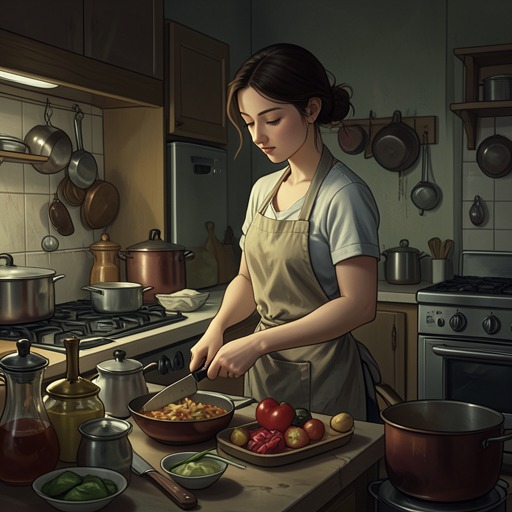
Evie’s first decisive intervention in Mo’s life is practical. After a chaotic day in the kitchen, she explains that Pete can perform basic food preparation but becomes flustered during a rush and has been known to leave crying. Buzz’s method of directing him is part of the problem. Evie therefore offers Mo a full-time position while Buzz is away, including responsibility for baking. The offer is not charity. She has observed that Mo does not faint at blood, helps a near stranger, cooks consistently, and leaves the tip jar untouched. Evie reads character through conduct, especially conduct involving labor and trust.
Mo initially planned an idle life in Grundy, but the Blue Glacier gives her a carefully bounded way to enter the town. She likes the kitchen because it lets her feel part of the room without losing privacy; she likes the saloon’s voices and chatter; and she likes being near Evie. Accepting the job becomes a baby step into the community, and Evie becomes the employer whose confidence makes that step possible. The later offer by Evie and Buzz of a twenty-percent share in the saloon confirms that Mo’s labor has become economically and socially valuable. They also prepare a nursery in the Glacier’s office so she can continue working after maternity leave, extending Evie’s welcome from friendship into long-term practical support.
Evie’s companionship is not confined to the bar. She takes Mo to Bulk Wonderland in Conover to buy restaurant supplies, combining necessary shopping with lunch, manicures, mocha lattes, and the purchase of industrial-sized air freshener for the men’s room. On the drive, they sing deliberately terrible versions of “Love Shack” and “Rock Lobster,” giving Mo a rare chance to be silly and feminine after Grundy’s harsh, Spartan routine. The trip also clarifies how thoroughly Mo has adjusted to the one-street village: Conover’s traffic, neon, and chain stores feel overwhelming, while Evie’s presence makes the transition bearable. Their intimacy is built through ordinary errands and shared jokes as much as through revelations about werewolves.
Kinship, Secrecy, and Cooper Graham
Evie is Cooper Graham’s cousin on his mother’s side; she and Cooper grew up together in Crescent Valley. She knows that his hostility toward outsiders is rooted in his relationship to the packlands and that he dislikes the romanticized language of living in harmony with nature. More importantly, she knows what Cooper is. When Mo finally asks whether Cooper can turn into a wolf, Evie admits that she has known all along. Her own branch of the family is a dead line, meaning that its members cannot shift, while Cooper’s line has produced wolves in every generation.
Evie explains that Cooper was one of the first children of his generation to become a wolf and was expected to become that generation’s alpha. His speed and strength made the expectation obvious, but he chose to leave the family valley and move roughly a hundred miles away to Grundy. Evie presents that departure as devastating for a werewolf, not as simple stubbornness. Her knowledge allows Mo to interpret Cooper’s surliness as a mixture of family history, outsider distrust, and painful separation from the pack. In this role, Evie serves as the bridge between the man Mo knows and the lineage he has tried to leave behind.
She also helps maintain the boundary around the werewolf secret. Cooper spends increasing time at the Glacier, apparently monitoring whether Mo will keep her word and avoid exposing him. Evie’s saloon becomes the place where his guarded relationship with the town slowly changes: he begins speaking to people other than Buzz and Evie, and the regulars discover that his stories can be excellent when he is not snarling at them. Evie thus provides both surveillance and social cover. She understands that Cooper’s visits may be motivated by fear of disclosure, yet she allows the repeated contact to become a less hostile form of belonging.
Friendship Under Pressure
Evie’s loyalty to Cooper and the pack creates a genuine conflict with her loyalty to Mo. When Mo asks about the werewolf secret, Evie first hesitates, then relaxes once she realizes that Mo has already understood the truth. She can laugh because her own family branch cannot transform, but she is also aware that Mo has crossed into a dangerous intimacy with a secretive community. Her earlier attempt to set Mo up with Cooper therefore carries both matchmaking humor and a calculated confidence that his identity need not make him unsuitable as a partner.
The conflict becomes sharper during the investigation into attacks on people and animals. Cooper wants to visit his grandfather and question Eli, while also warning the pack that people in Grundy are considering hunting wolves. Evie recognizes the danger of that visit and the importance of the communication, but she remains committed to allowing the pack to solve its own problems. When Mo suggests betraying Cooper and the pack by directing Alan Dahling toward a large wolf population for bite-mark comparisons, Evie rejects the idea because it would violate the trust placed in Mo. For her, secrecy is not merely concealment; it is an obligation created by being admitted into the family’s confidence.
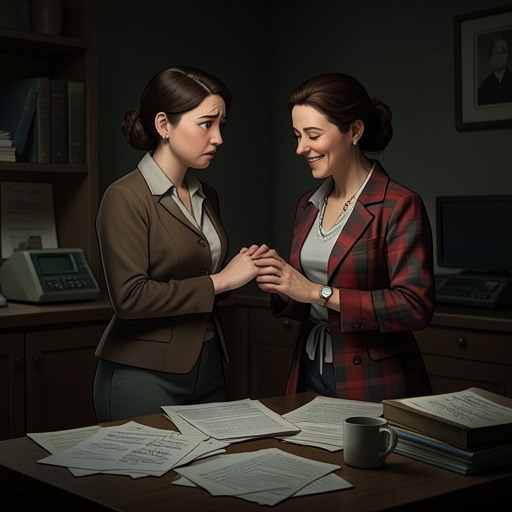
Mo sees the moral cost of that position more starkly. Someone within or near the pack may be attacking people, and Buzz, Alan, and others may be in danger. Evie initially insists that this is not something either woman can stop, then acknowledges that she would find a way if she believed she could prevent further injuries. Her apology is important because it does not erase the conflict. Instead, she admits that Mo is new to a life Evie has taken for granted and recognizes the helplessness that comes with having knowledge but no clear authority to act. The two women repair the argument by affirming that werewolves will not be allowed to destroy their friendship.
Family Network and Lasting Significance
Evie’s role extends into the wider pack network. She recognizes Eli as the werewolf politician when he visits the Glacier and observes his imperious manner as he attempts to summon Mo to his table. Her familiarity with pack politics helps frame the encounter even when she is not directly conducting it. Later, after Eli’s loss, the pack adopts a secret-ballot system for choosing an alpha, and Maggie Graham wins decisively. Evie’s world therefore changes from one organized around inherited expectations and dominant authority toward a more democratic arrangement, even though Cooper continues to refuse the alpha position.
Her place in Mo’s life also becomes inseparable from the pregnancy and marriage that follow Mo’s relationship with Cooper. Mo turns to the books for information about carrying a werewolf child and finds that human women carrying werewolf babies have an approximately six-month gestation, midway between the human and wolf periods. Although Evie is the person Mo wants to call for reassurance, the crisis initially leaves Mo searching alone. That absence reveals the limits of Evie’s protective mediation: she can explain the culture and offer emotional refuge, but she cannot remove every uncertainty created by human-werewolf intimacy.
Even so, Evie and Buzz ultimately institutionalize their support. Their offer of a share in the saloon, the nursery in the office, and the continued welcome of the Glacier make the workplace a form of extended family. Evie’s importance is therefore cumulative. She introduces Mo to Grundy’s codes, hires her, protects her social standing, discloses the truth about Cooper, defends pack secrecy, argues with her when danger demands it, and remains close enough for reconciliation. Through Evie, the Blue Glacier becomes more than a restaurant or bar: it is the bridge where an outsider acquires work, friendship, kinship, and a place within a community whose boundaries are guarded by both hospitality and silence.